About the Iris Nebula
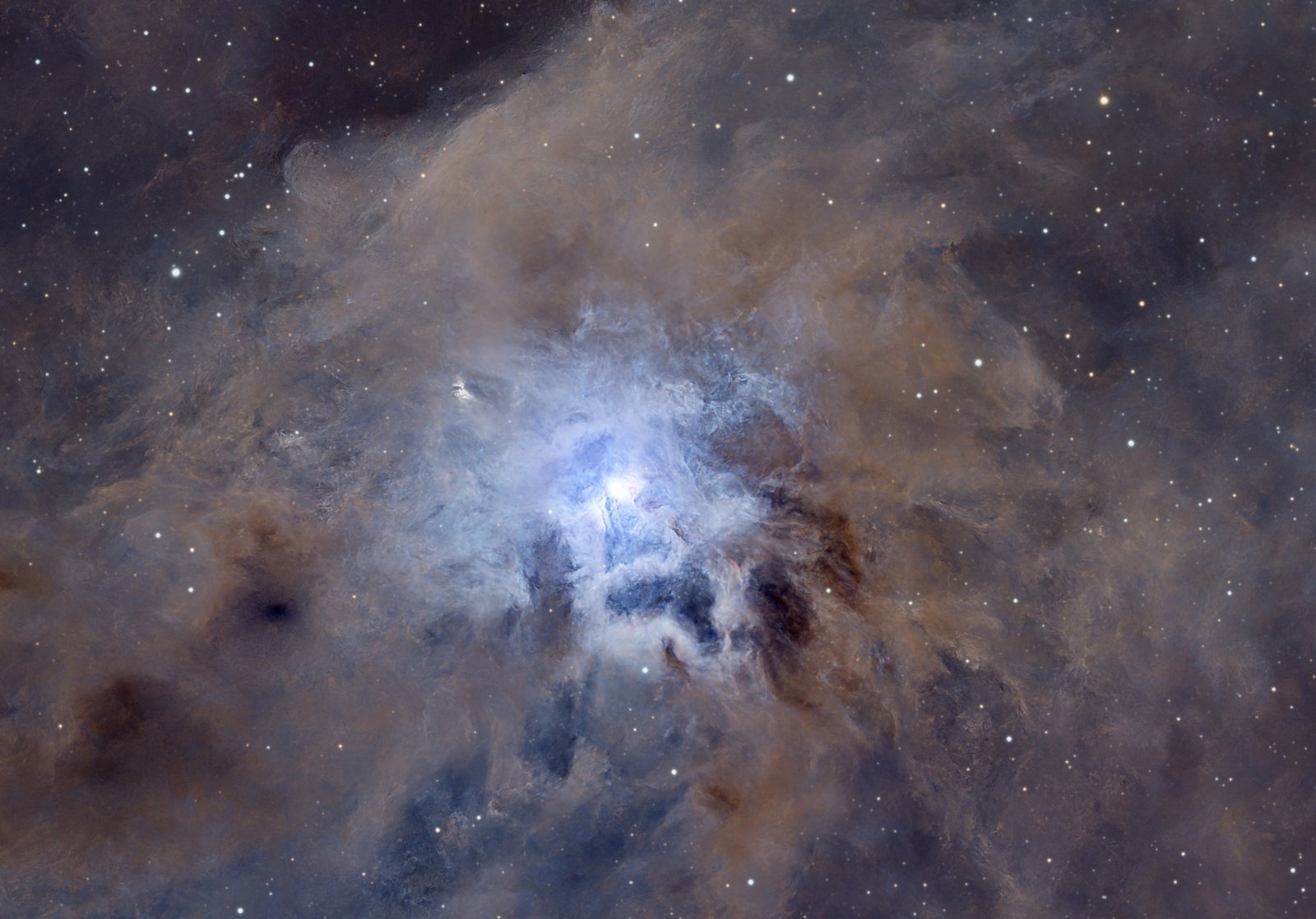
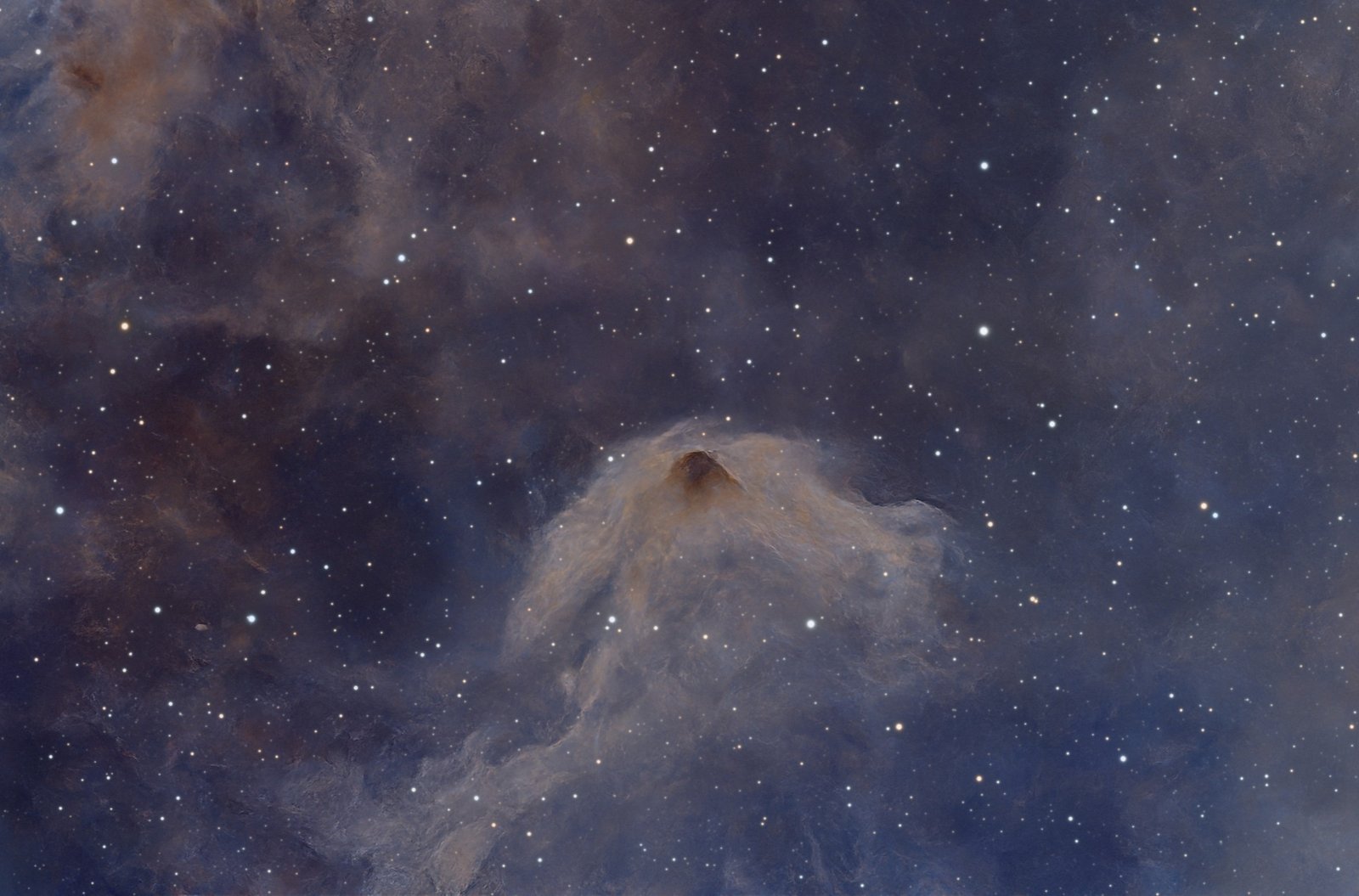
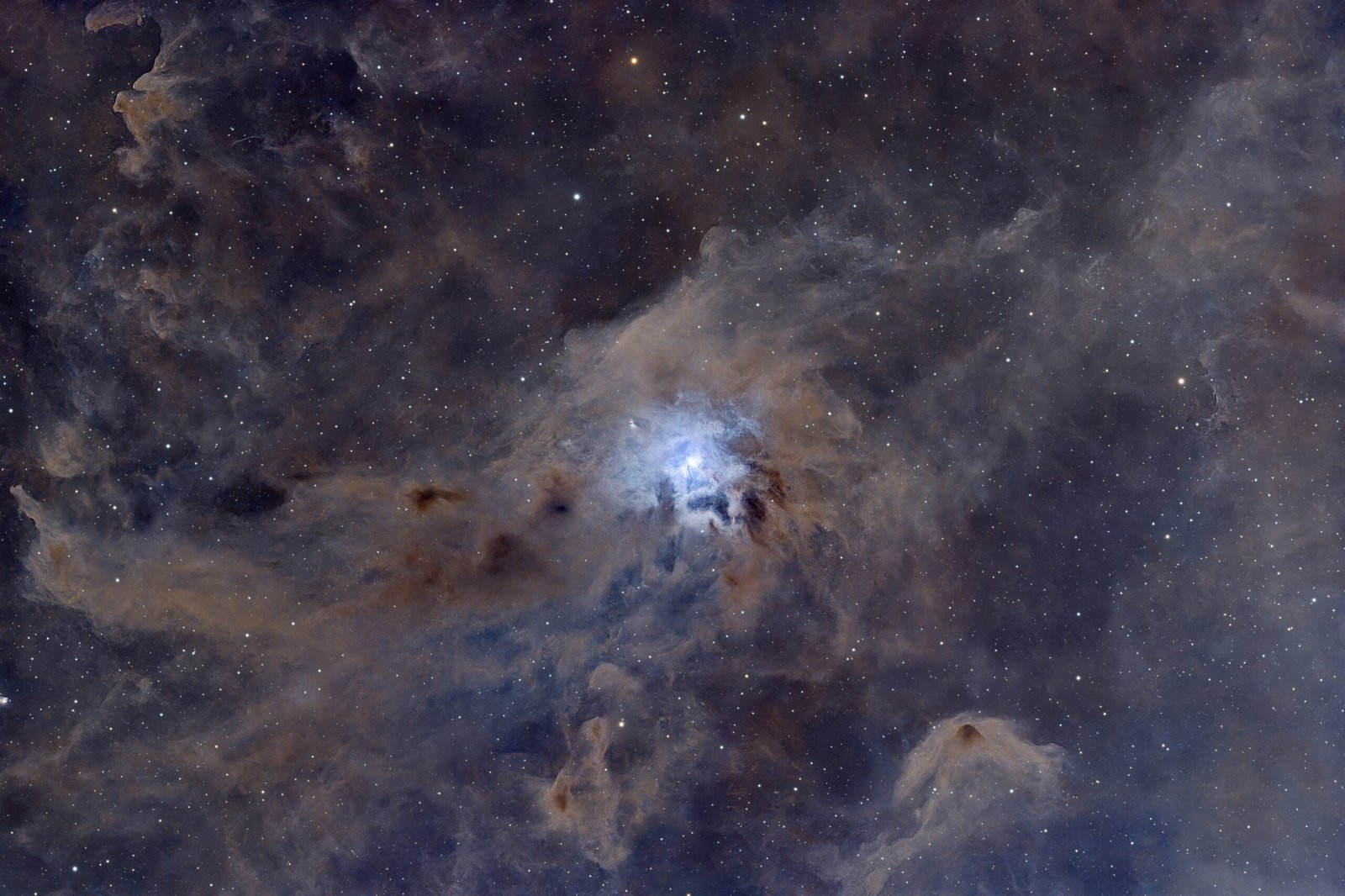
The Iris Nebula (NGC 7023), also known as the Iris Flower Nebula, is a beautiful reflection nebula located approximately 1,300 light-years from Earth in the constellation of Cepheus. Discovered by astronomer William Herschel in 1794, this remarkable deep-sky object is illuminated by a young, hot star known as HD 200775, whose light scatters off surrounding clouds of interstellar dust, creating the nebula's distinctive blue appearance. Unlike emission nebulae, the Iris Nebula does not produce its own visible light. It is made up of gas and fine dust particles, with darker surrounding clouds containing dense concentrations of material and complex carbon-based molecules. One of its most fascinating features is the faint reddish glow found within some of its dust clouds, caused by ultraviolet radiation interacting with carbon-rich dust. Spanning several light-years across, the Iris Nebula is a particularly rewarding target for astrophotography, revealing intricate dust structures and subtle colours that make it one of the most distinctive reflection nebulae in our night sky.
Capturing the Iris Nebula
Capturing the Iris Nebula (NGC 7023) turned out to be one of the most frustrating imaging projects I've undertaken. A total of 274 light frames, each with a 120-second exposure, were captured over five nights during October and November 2026. Unfortunately, the sessions were plagued by ongoing problems with my Sky-Watcher EQ-AL55i PRO mount. The RA drift was absolutely shocking, with the target regularly moving out of frame and requiring constant re-centring. Guiding performance was woeful, forcing me to discard a significant number of subframes due to poor tracking and star trailing. Eventually, it became clear that the RA gears had actually locked up entirely, leaving the mount barely fit for purpose. Despite being just seven months old, it had to be returned to the supplier and was thankfully replaced under warranty. To say I was disappointed and frustrated would be an understatement. As for framing the Iris Nebula itself, that presented another challenge. The surrounding dust clouds are extremely difficult to distinguish in a live preview, making it surprisingly tricky to confirm the composition. I eventually concentrated on the brightest central star and hoped I had positioned the actual Iris Nebula correctly. Given the mechanical problems, the discarded frames and the sheer frustration of those five nights, I'm genuinely surprised I've managed to recover enough usable data to produce an image I'm happy with.
Equipment Used for Iris Nebula
Processing the Iris Nebula
Before & After
Iris Nebula: Before and After Processing
A comparison of the original stacked data and the final processed Iris Nebula (NGC 7023) image.
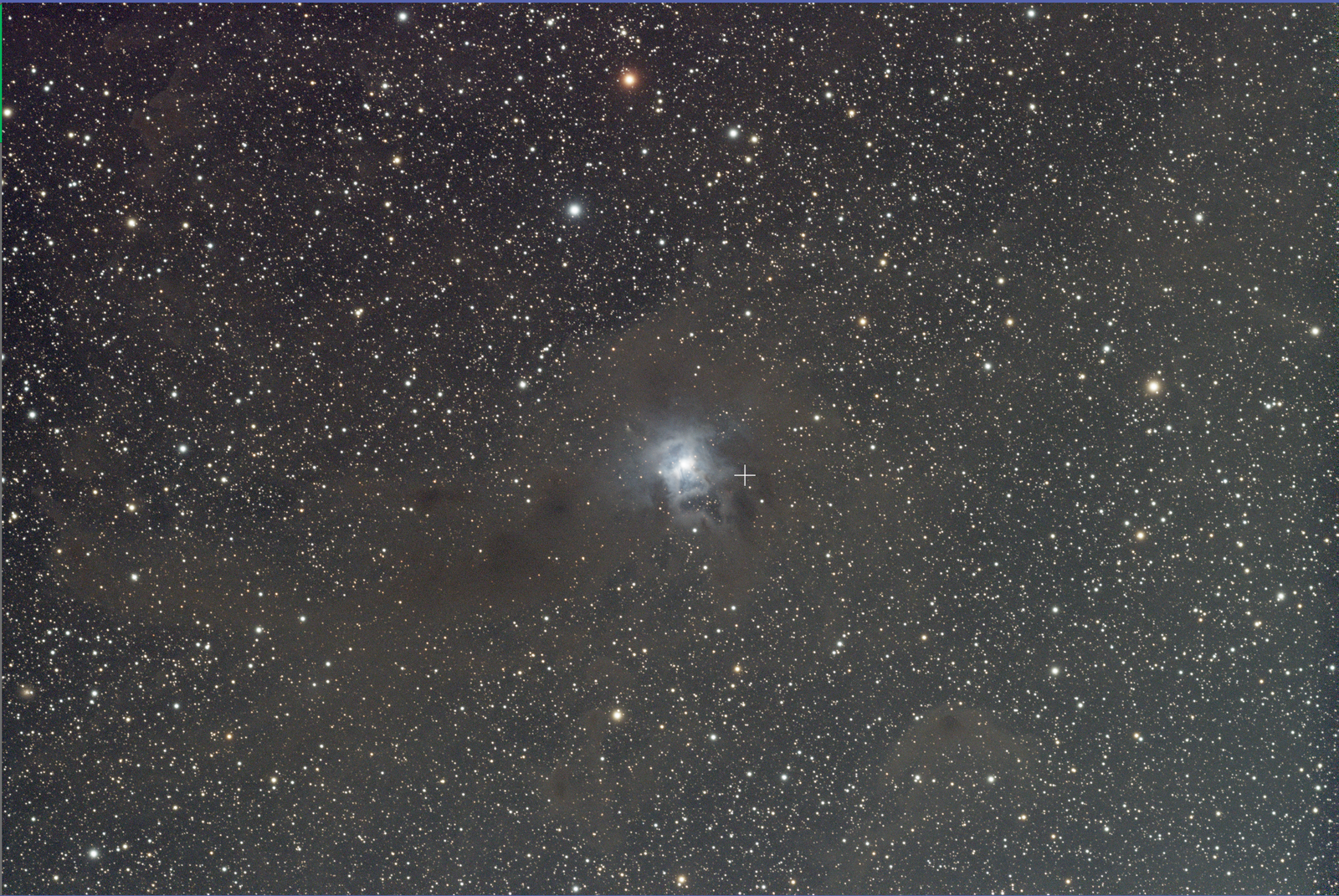
Drag the slider to compare both versions.
From the original stacked data to the finished Iris Nebula photograph. PixInsight processing brought out the delicate blue reflection nebulosity, intricate dust structures and finer details surrounding the central star.
Andromeda Galaxy: Close-Up Details