About the Andromeda Galaxy
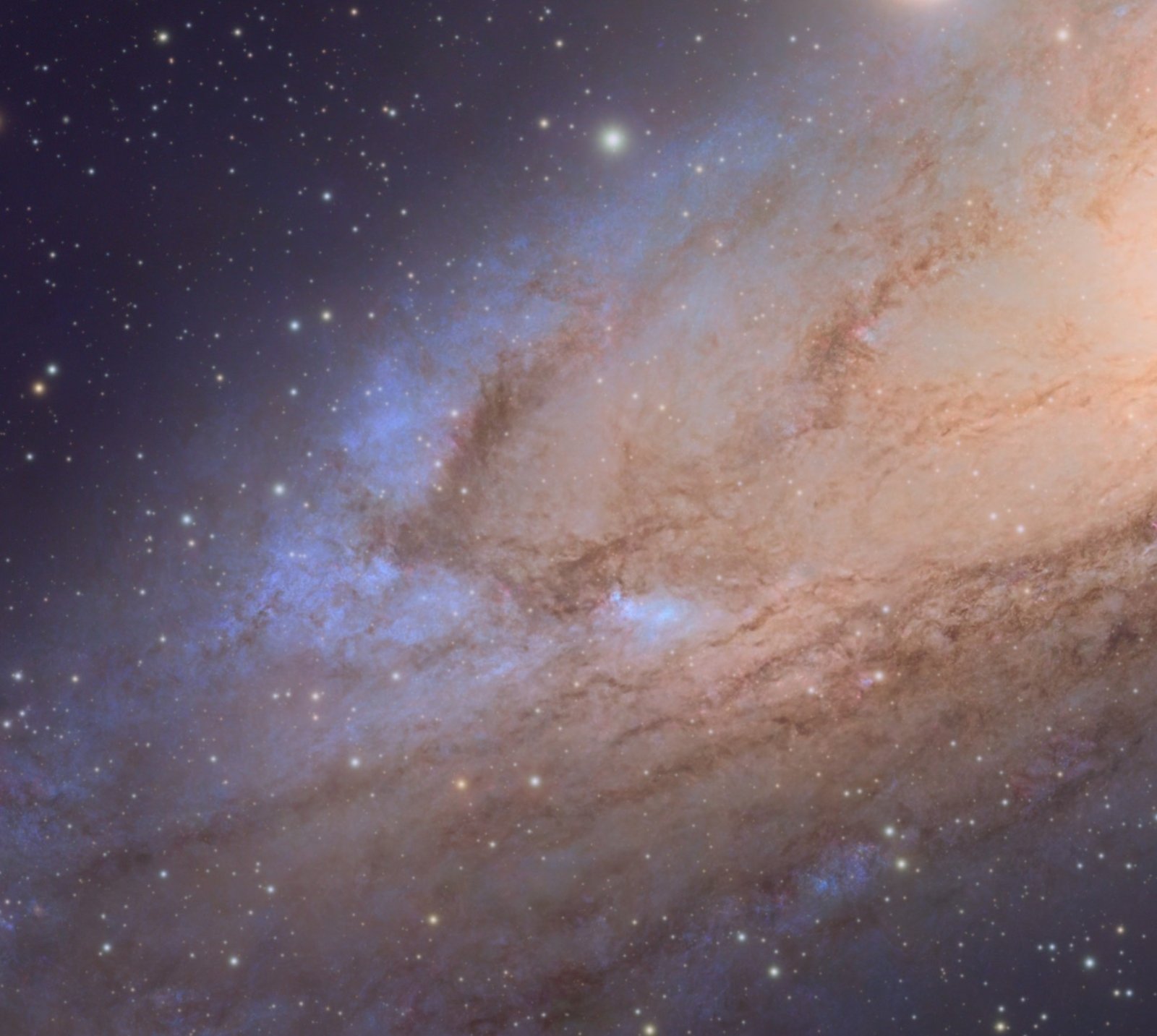
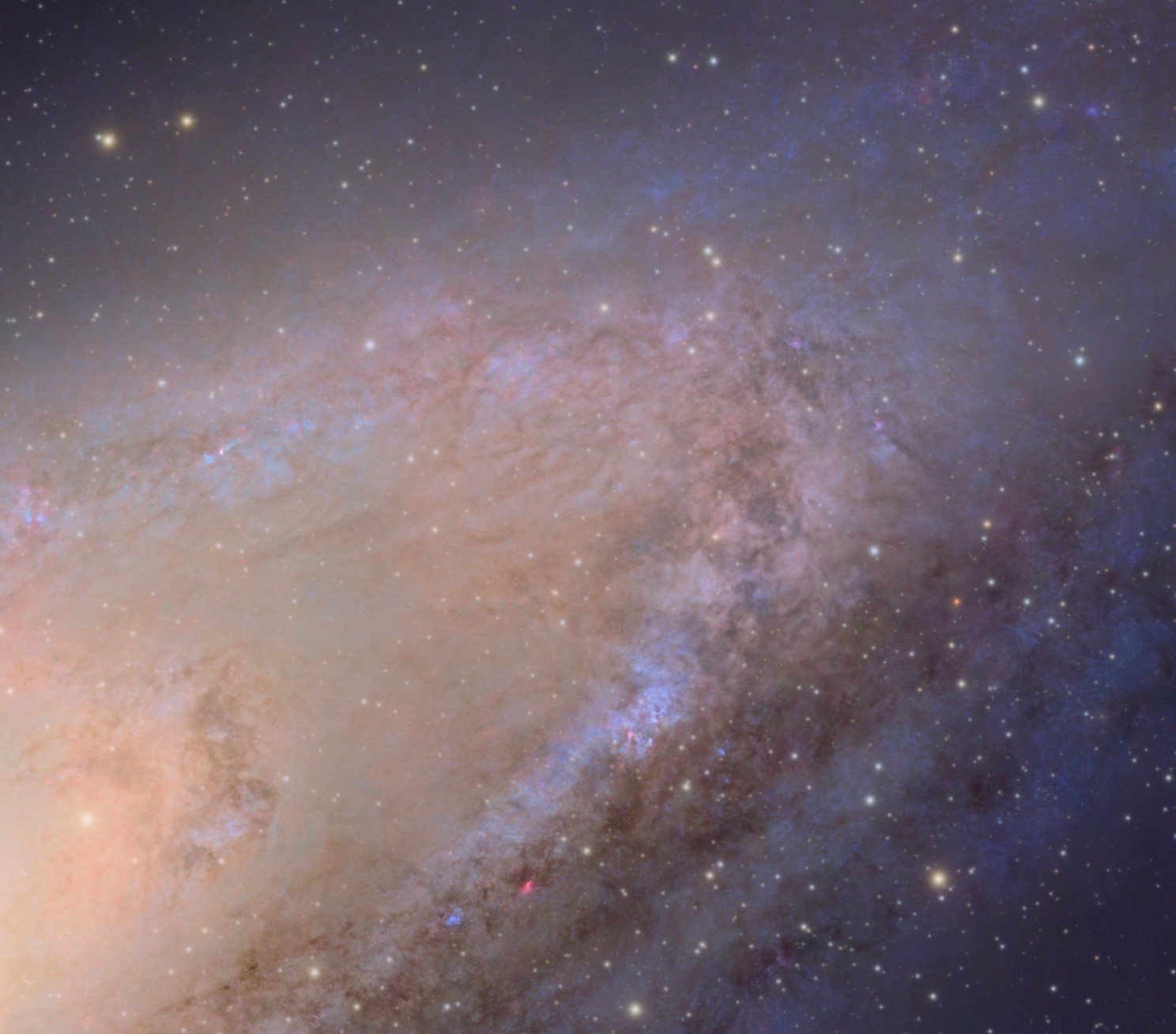
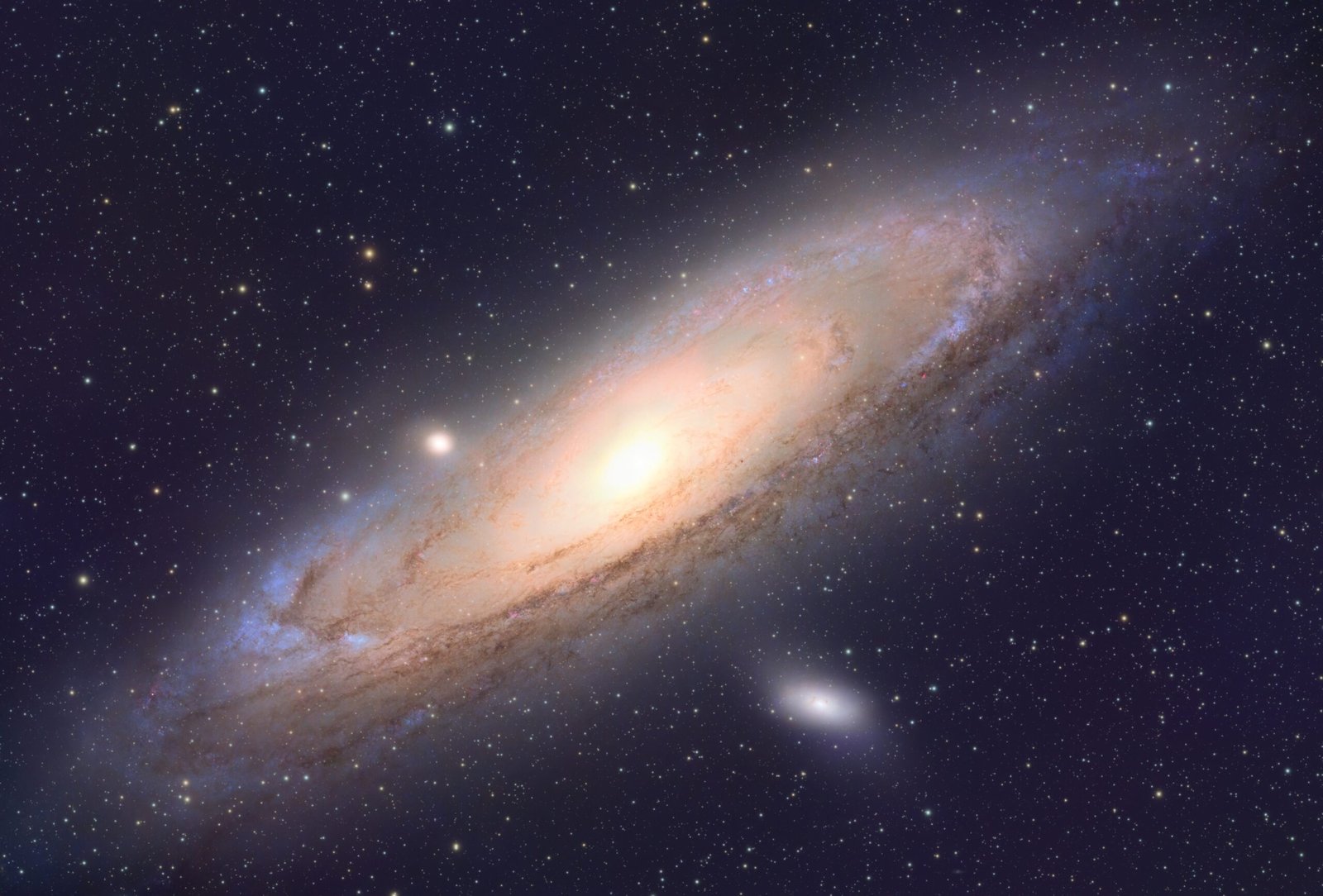
The Andromeda Galaxy (M31) is our nearest major galactic neighbour, located approximately 2.5 million light-years from Earth. This Andromeda Galaxy astrophotography project captures our neighbouring spiral galaxy using the Askar 71F apochromatic refractor at 490mm focal length, paired with a ZWO ASI2600MC Pro colour camera. Captured over four nights in October 2026, the image combines 221 exposures of 120 seconds, giving a total integration time of 7 hours and 22 minutes.Andromeda is an enormous island of stars, gas, dust and dark matter, containing an estimated trillion stars and spanning around 220,000 light-years. The light captured in this image began its journey towards Earth around 2.5 million years ago, long before modern humans existed.At its heart lies a supermassive black hole, estimated to have a mass around 100 million times that of our Sun. Surrounding it is a densely packed central bulge dominated by older stars, while the galaxy's spiral arms contain clouds of gas and dust where new stars form. The dark lanes visible across the disc are dense concentrations of interstellar dust, silhouetted against the combined light of billions of distant stars. Andromeda also has numerous smaller companion galaxies, including M32 and M110, which are gravitationally associated with it.Andromeda and the Milky Way are the two largest galaxies in the Local Group, a collection of galaxies held together by gravity. For decades, astronomers expected the two galaxies to collide and eventually merge in around four to five billion years. More recent research suggests that this outcome is less certain than previously thought. Regardless of their eventual fate, Andromeda offers us an extraordinary opportunity to study a galaxy beyond our own and glimpse a distant chapter in the history of the Universe.I chose Andromeda because it is a target that almost every astrophotographer attempts at some point. For this project, I wanted to go beyond simply capturing it and create an image that I could genuinely call my own. I could never expect to compete with professional space-telescope imagery, such as this remarkable Hubble image, but it is rewarding to see how much detail can be captured from my own back garden using a relatively compact telescope.This project has been a valuable learning experience, particularly when processing Andromeda's bright central core while bringing out the subtle detail and colour in its spiral arms. It has also shown me what the Askar 71F can achieve on one of the most popular targets in astrophotography.
Capturing the Andromeda Galaxy
Captured over four nights in October 2026, this image comprises 221 exposures of 120 seconds each, giving a total integration time of 7 hours and 22 minutes. Imaging took place under dark skies, with the Moon having set and no longer affecting the session, allowing me to make the most of the available conditions.Andromeda was a relatively straightforward target to locate and frame, which is probably one of the reasons it is so popular with beginners. It was certainly part of the appeal for me when I first started astrophotography. However, I wanted to take the time to capture enough detail and depth to produce an image that I could be proud of and genuinely call my own.
Equipment Used for Andromeda Galaxy
Processing Andromeda Galaxy
Before & After
My Andromeda: First Attempt vs Later Processing
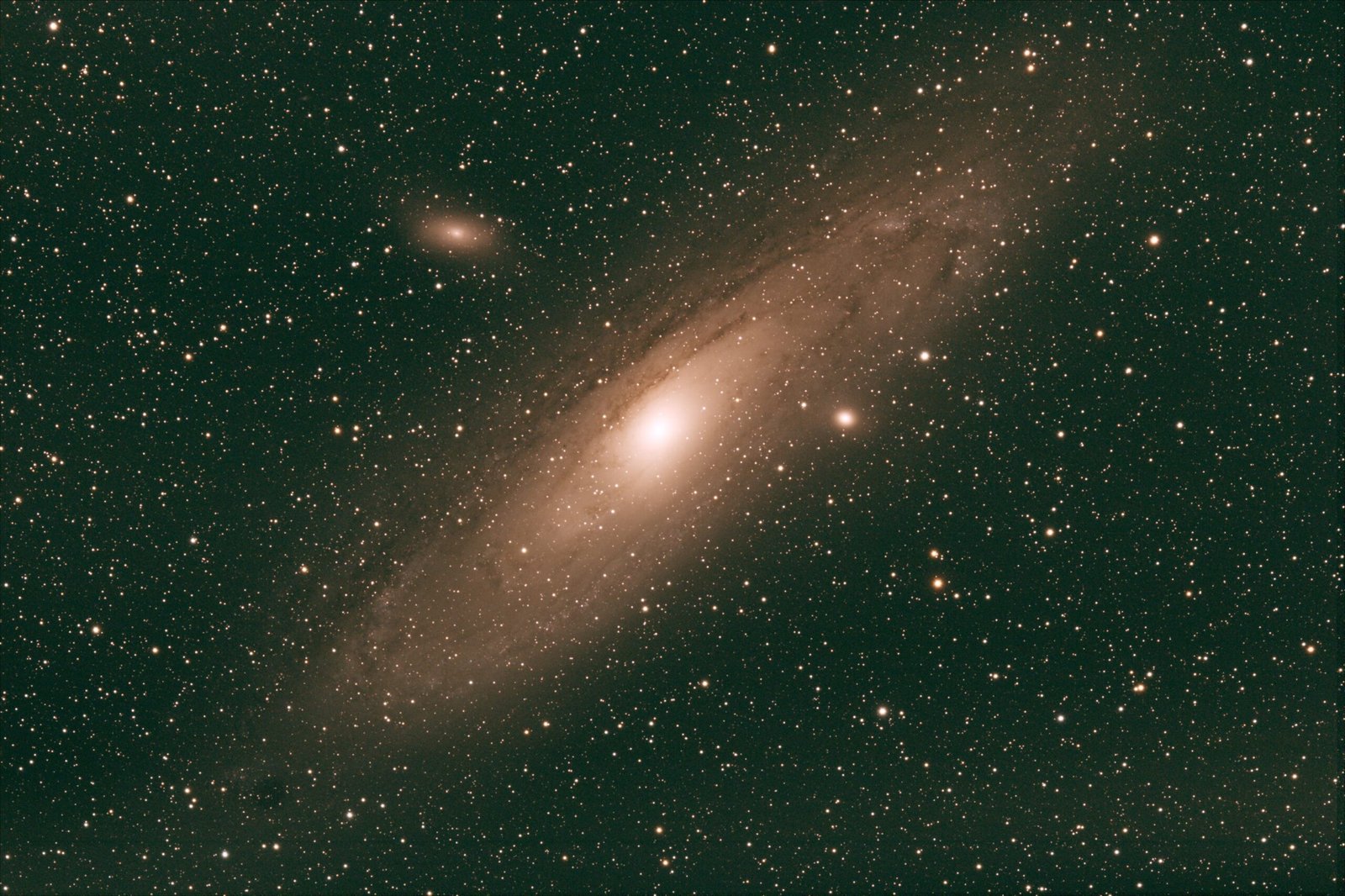
Drag the slider to compare both versions.
My early astrophotography processing compared with a later attempt. Learning to control the stretch, manage the bright galactic core and bring out detail has been a significant part of my PixInsight journey.
Andromeda Galaxy: Close-Up Details