About The Crescent Nebula
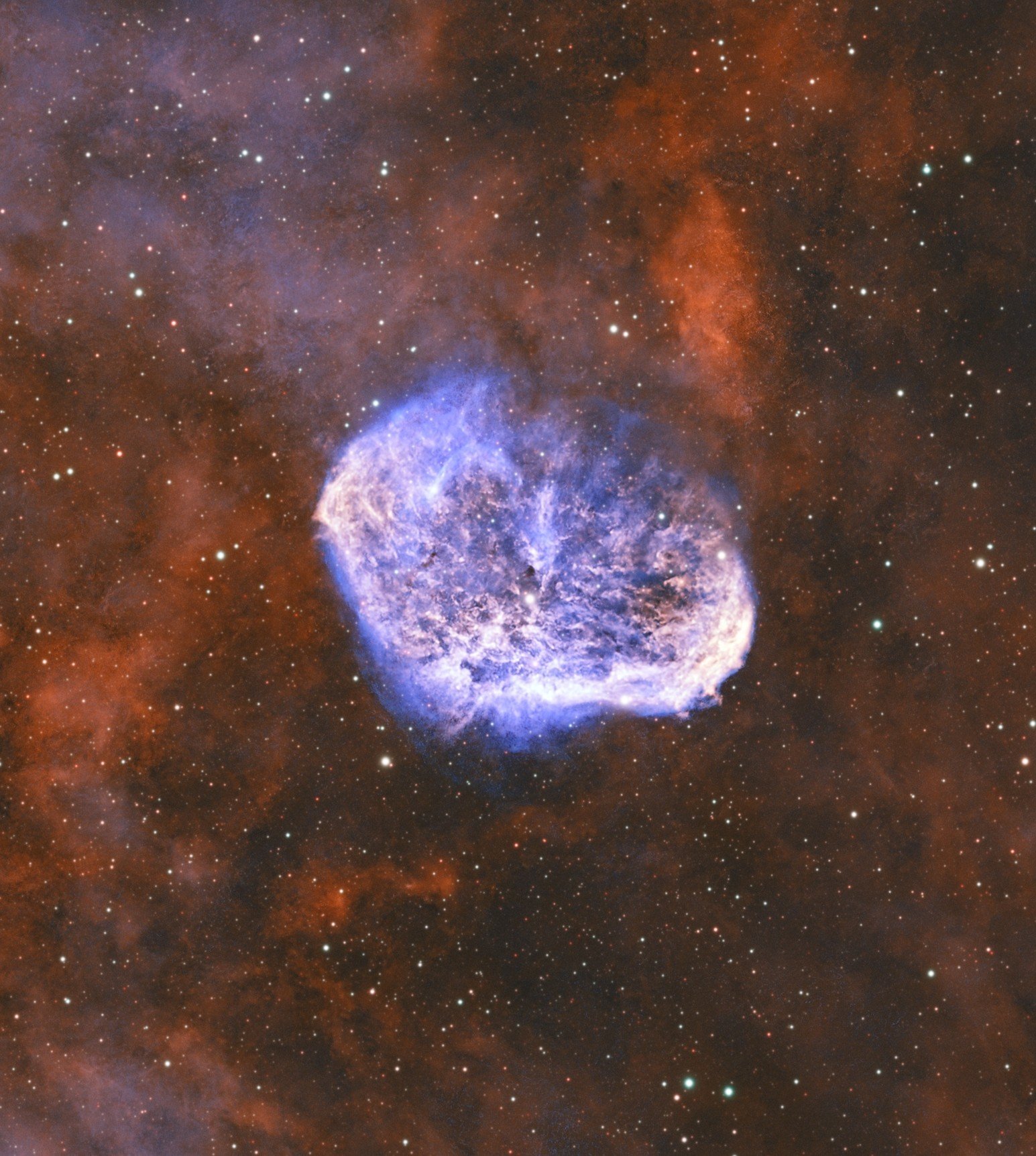
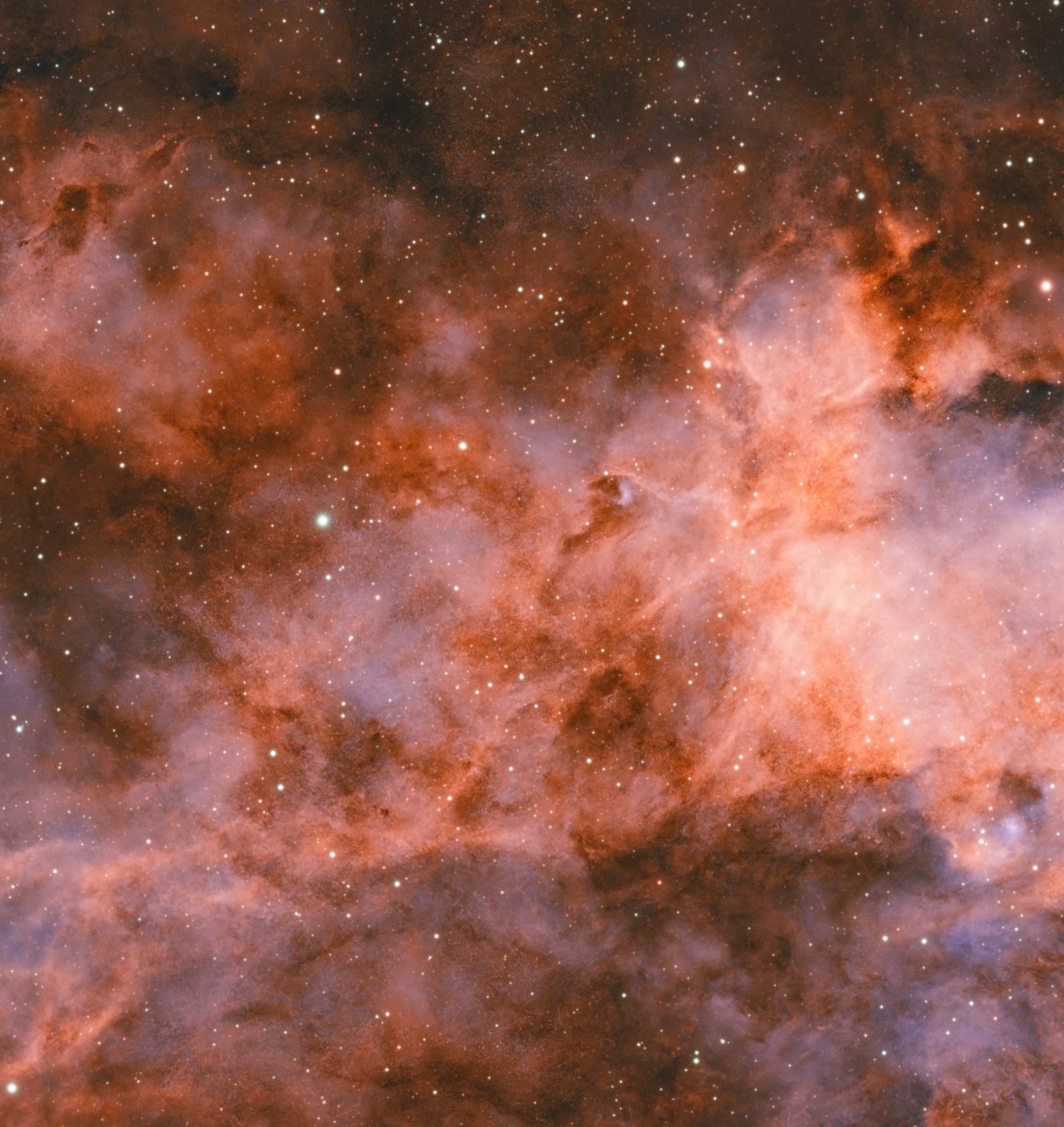
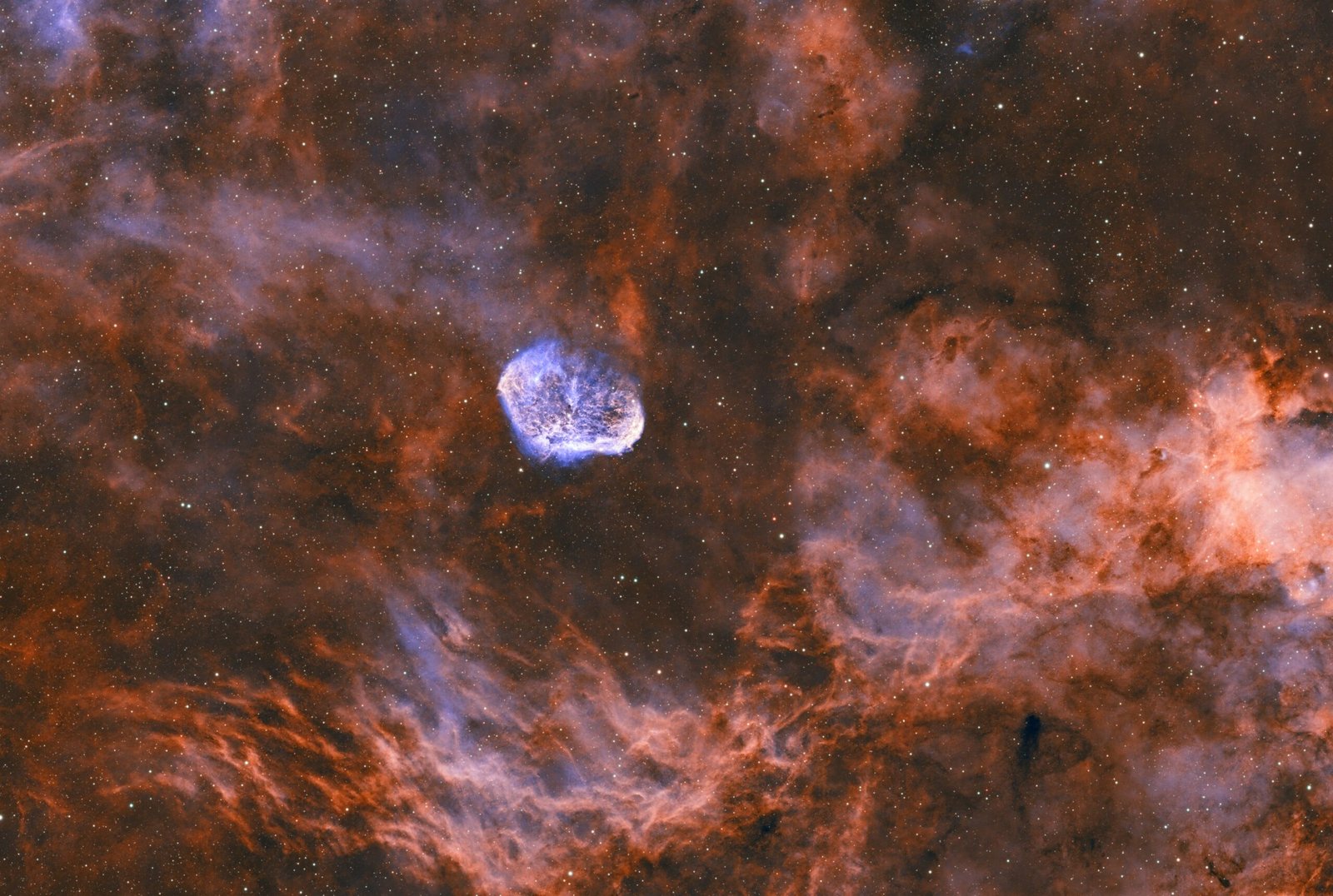
The Crescent Nebula (NGC 6888) lies around 4,700 light-years from Earth, in the constellation Cygnus. First discovered by William Herschel in 1792, it was given its name because, through the telescopes available at the time, its brightest features appeared to form a simple crescent shape. With modern imaging, we can see that there is considerably more going on here than a cosmic half-moon.At its heart lies WR 136, an enormous, incredibly hot star nearing the end of its life. Classified as a Wolf-Rayet star, it is shedding material through powerful stellar winds. Earlier in its life, the star expelled its outer layers into space. Its current, much faster stellar wind is now crashing into that older material, compressing and heating it into an intricate, expanding shell of gas. The result is a vast structure roughly 25 light-years across.And this is where things get interesting. Despite its name, the Crescent Nebula is actually more like a giant, turbulent bubble of gas, its surface torn into a chaotic network of filaments, knots and folds. Much of what we see is glowing hydrogen, oxygen and other ionised elements, energised by the star's intense radiation and the violent collision of stellar winds. The bubble isn't a solid shell, but a complex, ragged structure of gas, with a thin outer skin surrounding a mass of intricate detail.Depending on how you look at it, the result resembles a Rice Krispie or, perhaps, a rather unfortunate severed space testicle. Either way, it's a considerable departure from the elegant crescent that William Herschel originally saw.What first attracted me to this target was its shape when viewed up close. The more I zoomed in, the stranger it became. The intricate folds, ripples and tangled textures seemed almost surreal, with parts of the nebula resembling the convoluted surface of a brain. It looks less like a distant cloud of gas and more like something organic, alive and impossibly intricate.That's what makes the Crescent Nebula such a fascinating object to photograph. Beyond the familiar outline lies a remarkable landscape of cosmic turbulence — the remnants of a star tearing apart its surroundings as it approaches the final stages of its life.
Capturing
The Crescent Nebula was captured over six nights in July, which meant plenty of late nights under the summer skies. Framing the target was relatively straightforward, as the distinctive crescent — or bubble — shape was already visible in the ASIAIR preview, making it easy to position within the frame.This was only my second proper deep-sky imaging project, so I was still very much in the learning phase, getting to grips with the equipment, capture settings and overall workflow.In total, I managed to capture 98 sub-exposures of 180 seconds each, giving me just under five hours of integration time. Imaging under Bortle 4.5 skies helped, although the relatively short integration time did leave some noticeable noise in the final image.With hindsight, more exposure time would undoubtedly have helped bring out the finer details and produce a cleaner result. Nevertheless, for only my second serious attempt at deep-sky astrophotography, I was happy with the outcome. There was plenty to learn from the session, and capturing an object this strange and intricate felt like a worthwhile achievement in itself.
Equipment Used
Processing
Crescent Nebula — From Linear Data to Final Image
See how the Crescent Nebula looked when first opened in PixInsight, compared with the finished image after processing.
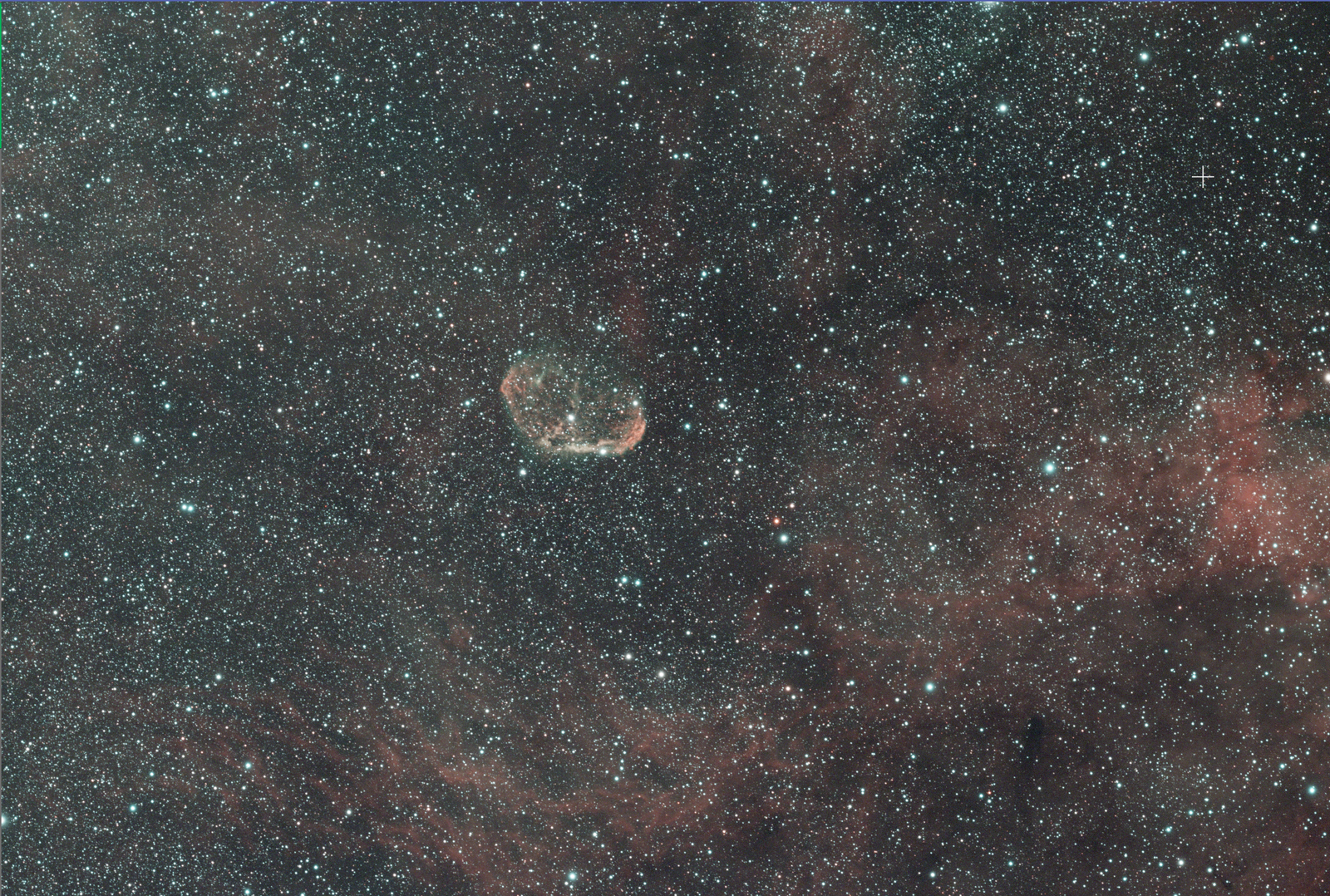
Raw astrophotography data can look dark and almost featureless when first opened. Processing reveals the Crescent Nebula's delicate structure, colour and surrounding nebulosity captured over the imaging session.
Close Up