About The Western Veil Nebula
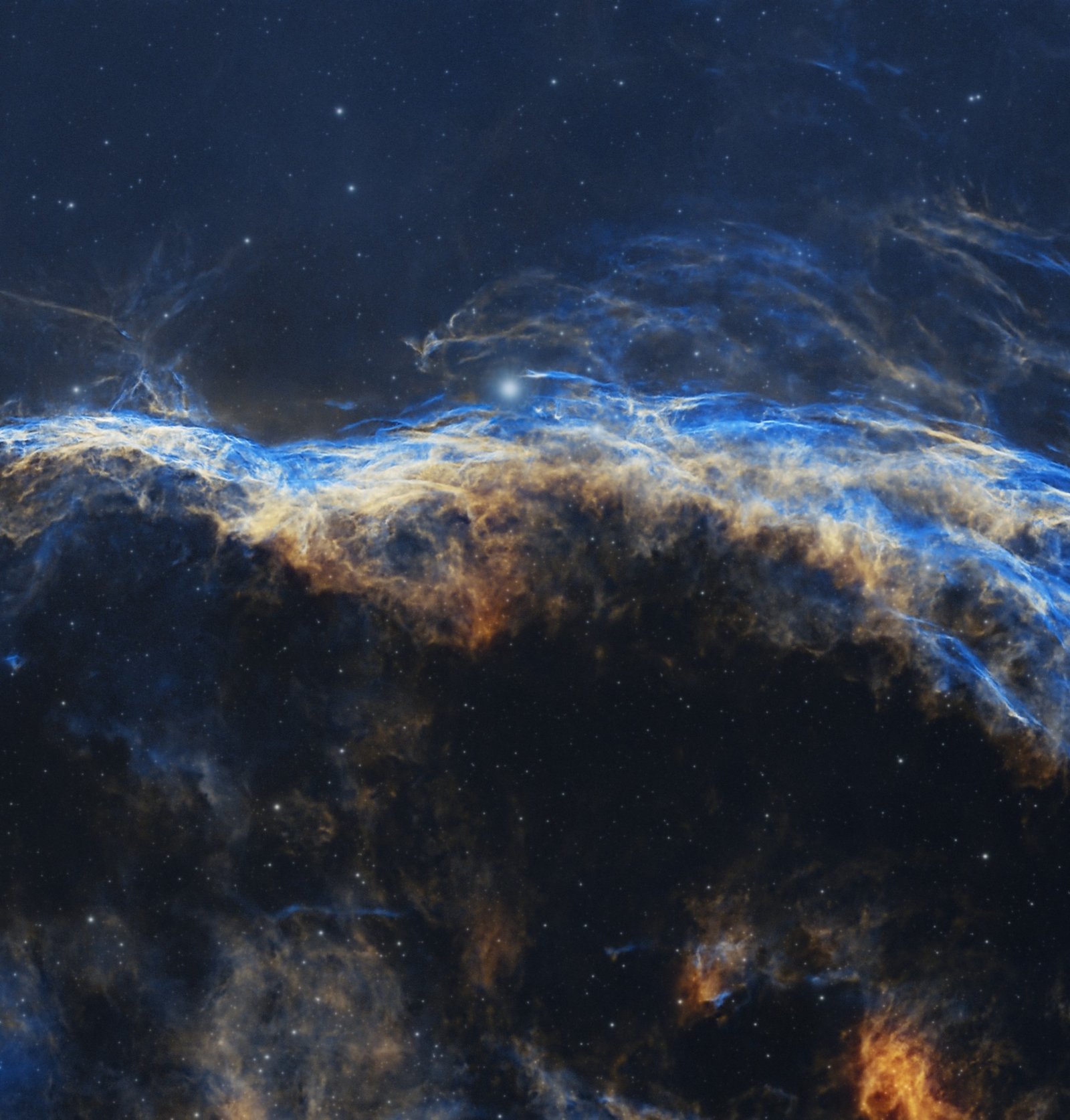
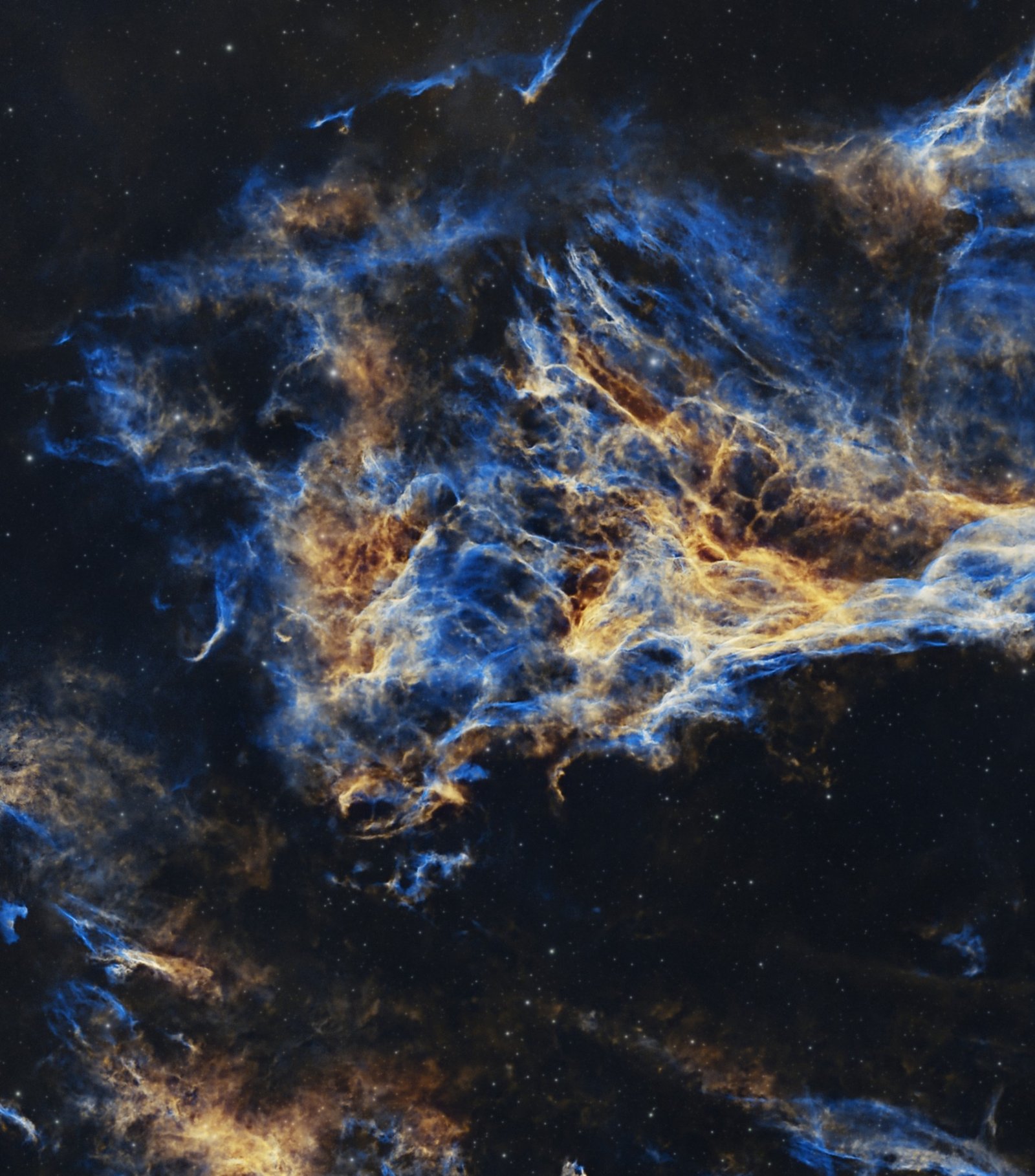
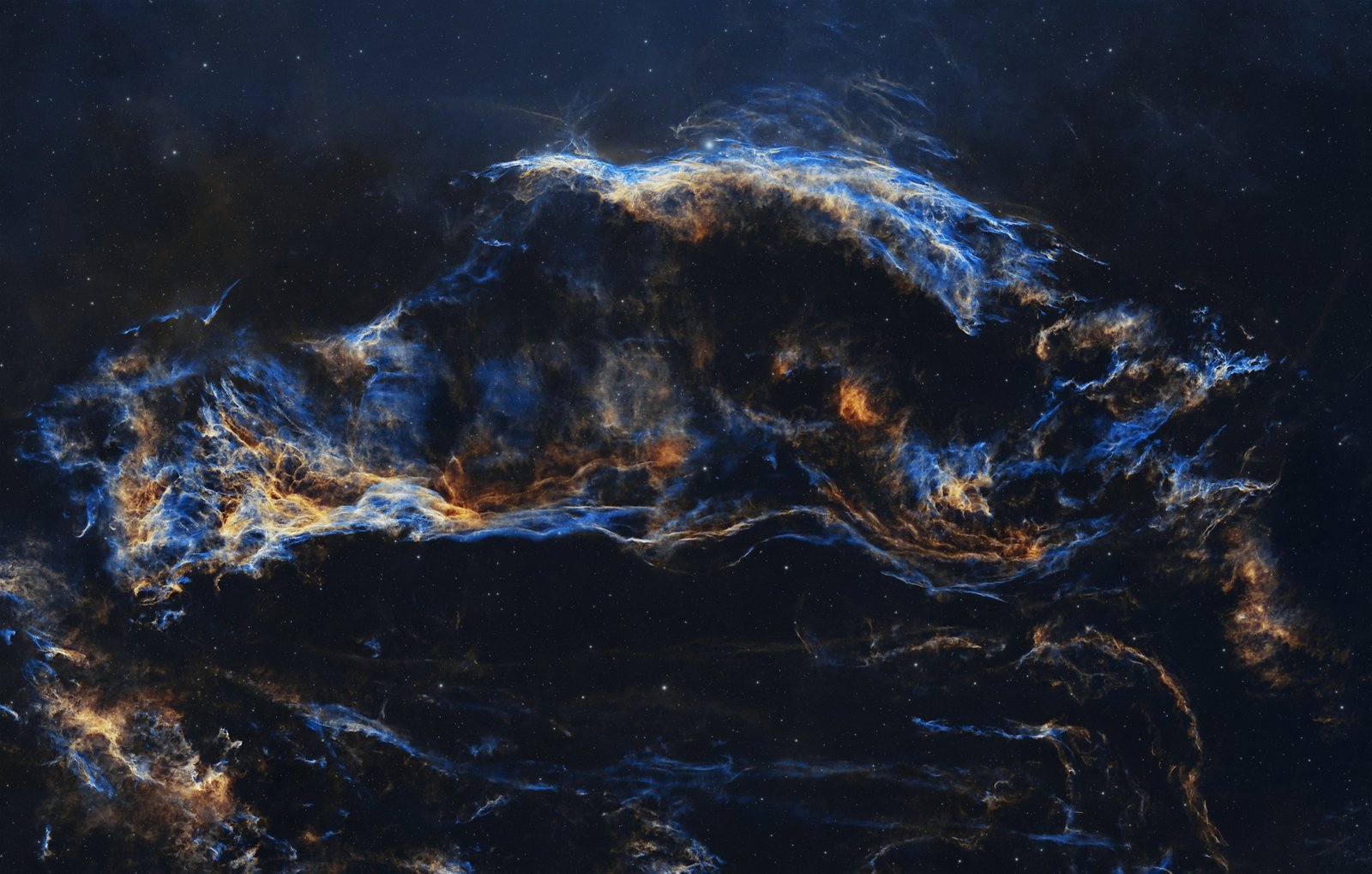
The Western Veil Nebula is part of the Veil Nebula Complex, a vast cloud of gas and dust in the constellation Cygnus. Located approximately 2,400 light-years from Earth, it is the remnant of a massive star that exploded as a supernova thousands of years ago.As the shockwave from the explosion expanded into the surrounding interstellar medium, it heated and excited the gas, creating the delicate filaments and intricate structures visible today. The Western Veil, also known as the Witch’s Broom Nebula (NGC 6960), is one of the most recognisable sections of this enormous structure, with its intricate strands of glowing hydrogen and oxygen stretching across the night sky.For astrophotographers, the Veil offers a fascinating combination of fine detail, contrasting colours and complex structures. It is a reminder that some of the most beautiful objects in the night sky are the remnants of extraordinary cosmic events.
Capturing
This image was captured over three nights in August 2026, under Bortle 4.5 skies. With the summer nights remaining relatively bright for much of the evening, each session required staying up late to make the most of the available darkness.The final image is made up of 144 exposures, each lasting 180 seconds, giving a total integration time of 7 hours and 12 minutes.One of the biggest challenges during capture was judging how the image would turn out. The Western Veil Nebula appeared extremely faint in the ASIAIR preview, making it difficult to assess just how much of the delicate nebulosity was being recorded. I was also conscious of getting the composition right, ensuring the main structures of the nebula were properly framed within the field of view.At the time, there was some uncertainty about whether the framing and accumulated data would reveal the detail I was hoping for. It was a good reminder that the live preview only offers a limited impression of what several hours of carefully collected data can reveal once stacked and processed.
Equipment Used
Processing
Western Veil Nebula — From Linear Data to Final Image
What astrophotography data can look like when first opened in PixInsight, compared with the finished image after processing.
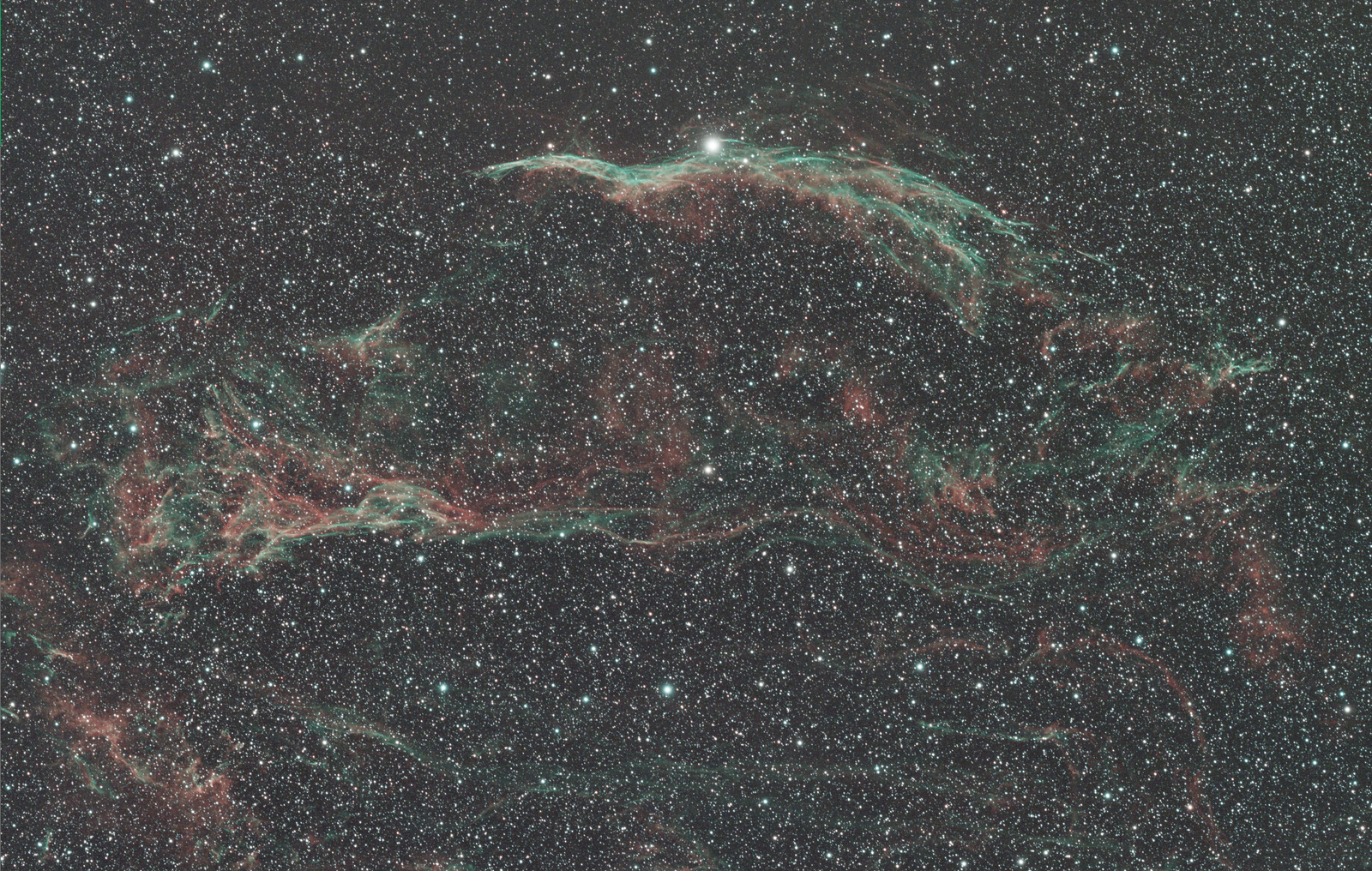
Drag the slider to compare the initial data with the finished image.
When first opened in PixInsight, deep-sky imaging data can appear dark and almost featureless. The faint nebula signal is present in the data, but it needs careful stretching, colour work and further processing to reveal the structure and detail in the final image.
Close Up